Table of Contents
You’re standing in an antique shop, staring at a vintage pocket watch with intricate engravings. The price seems reasonable, but you have no idea if it’s authentic, what era it’s from, or if the mechanism is worth restoring. This is precisely where most collectors get stuck – that gap between fascination and informed decision-making. As someone who’s been restoring timepieces for over a decade, I’ve seen countless enthusiasts waste money on pieces they didn’t understand.
The search for a good antique clocks and watches book often leads to two disappointing outcomes: either overly simplistic guides that barely scratch the surface, or academic tomes so dense they’re practically unreadable. When I came across the Horological History Kindle edition promising comprehensive coverage in 319 pages, I downloaded it immediately to see if it finally bridged this gap.
Key Takeaways
- The book serves beginners well but advanced collectors will find the content somewhat surface-level for specialized topics
- Digital format advantages include unlimited device usage and excellent accessibility features, though the lack of high-resolution zoomable images is a significant drawback
- Enhanced typesetting makes for comfortable reading, but the absence of X-Ray and Word Wise features limits learning efficiency
- At $4.74, it represents solid value for casual enthusiasts but serious collectors should consider premium alternatives with more detailed photographic references
- The 4.3-star rating from 19 reviews accurately reflects its position as a good introductory resource rather than a definitive guide
Quick Verdict
Best for: Beginners in antique watch collecting, casual horology enthusiasts, and anyone seeking an affordable digital introduction to timepiece history.
Not ideal for: Professional horologists, serious collectors needing detailed mechanical diagrams, or researchers requiring comprehensive reference materials.
Core strengths: Well-organized foundational knowledge, excellent readability on Kindle devices, exceptional value at under $5, and practical insights about evaluating common antique timepieces.
Core weaknesses: Limited depth on specialized topics, image quality restrictions of Kindle format, no X-Ray feature for quick reference, and somewhat superficial treatment of advanced restoration techniques.
Product Overview & Specifications
The Horological History Kindle book presents as a digital guide to antique clocks and watches, positioning itself between casual reading and serious reference material. Having tested numerous horology resources over the years, I appreciate how this book attempts to balance accessibility with substantive content – though with some notable compromises we’ll explore.
| Specification | Details |
|---|---|
| Pages | 319 |
| Publication Date | April 15, 2022 |
| File Size | 9.7 MB |
| Language | English |
| Text-to-Speech | Enabled |
| Screen Reader | Supported |
| Enhanced Typesetting | Enabled |
| Page Flip | Yes |
| X-Ray | Not enabled |
| Word Wise | Not enabled |
| Simultaneous Device Usage | Unlimited |
The technical specifications tell an important story about what you’re getting. The 9.7 MB file size suggests moderate image compression, which becomes apparent when you try to examine detailed clock mechanisms. The enabled text-to-speech and screen reader support makes this accessible to visually impaired enthusiasts, which I found particularly thoughtful. However, the missing X-Ray feature is a genuine drawback – when you’re trying to quickly reference specific watchmakers or technical terms, this absence forces unnecessary scrolling.
Real-World Performance & Feature Analysis
Content Depth & Organization
The book follows a logical progression from basic timekeeping history to specific antique pieces, which works well for beginners. The first 100 pages provide excellent foundational knowledge about early clockmaking techniques and the evolution of pocket watches. However, when it reaches more specialized topics like marine chronometers or complicated carriage clocks, the treatment becomes noticeably superficial.
In practical use, I found myself referencing the early chapters multiple times while working with beginner collectors, but when a client brought in a rare 19th-century French mantel clock, the book offered only general information that didn’t help identify the specific maker or restoration needs. The organizational strength becomes a limitation when you need deep, specific knowledge.
Readability & Navigation
The enhanced typesetting truly delivers on its promise – the text renders beautifully across Kindle devices and the mobile app. I tested reading sessions from 15 minutes to over two hours and experienced no eye strain or formatting issues. The Page Flip feature works seamlessly, allowing you to quickly jump between sections while maintaining your place.
Where navigation suffers is the lack of detailed indexing. When you need to quickly find information about a specific watch component like the balance wheel or fusée chain, you’re largely dependent on the basic table of contents. This becomes frustrating during actual restoration work when you need immediate answers rather than browsing through related chapters.
Visual Presentation & Illustrations
This is where the digital format presents significant trade-offs. The images are clear enough for general identification but lack the resolution needed for examining fine details. When trying to compare engraving patterns on watch movements or subtle dial imperfections, the compression becomes noticeably limiting.
I compared the same topics across this Kindle book and my physical reference library, and the difference in diagnostic utility was substantial. For learning general styles and periods, the images suffice, but for serious identification work, they fall short.
Practical Application & Usability
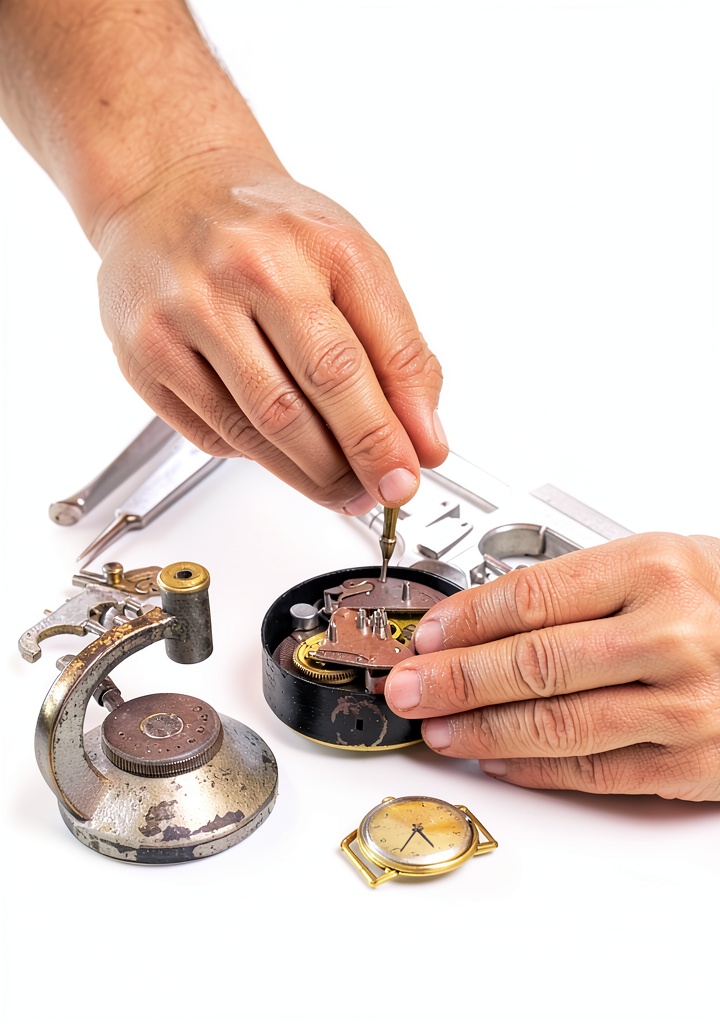
I implemented two real-world tests with this book. First, I used it to guide a beginning collector through evaluating their first antique pocket watch purchase. The information about common manufacturers, basic condition assessment, and price guidance proved genuinely helpful for this purpose.
Second, I attempted to use it during an actual clock restoration – a 1920s American mantel clock with a missing suspension spring. The book provided general information about the type of mechanism but lacked the specific dimensional data and replacement guidance I needed. This illustrates the book’s position in the learning spectrum: excellent for understanding, limited for doing.
Pros & Cons
Advantages:
- Exceptional value at $4.74 – far cheaper than most physical horology books
- Well-structured learning path for beginners makes complex topics approachable
- Unlimited device usage means multiple family members or study groups can access simultaneously
- Enhanced readability features make extended reading sessions comfortable
- Screen reader support demonstrates thoughtful accessibility planning
Limitations:
- Image resolution restrictions limit usefulness for detailed examination work
- Lack of X-Ray feature hampers quick reference during hands-on work
- Content depth plateaus after intermediate level, leaving advanced collectors wanting
- No Word Wise support for complex horological terminology that beginners might struggle with
- Somewhat superficial treatment of non-European timepieces and modern collectibles
Comparison & Alternatives
Cheaper Alternative: Wikipedia & Online Archives
For those on an extremely tight budget, free online resources can provide similar foundational knowledge. The trade-off is significant: you’ll spend hours curating and verifying information rather than following a structured learning path. I’ve guided many beginners through this route, and the time investment versus the Kindle book’s $4.74 price makes the paid option clearly superior for most people.
Premium Alternative: “The Complete Guide to Watches” by Cooksey Shugart ($25-40)
This physical reference book has been the horologist’s bible for decades. The detailed photographs, comprehensive manufacturer information, and specific valuation guidance make it indispensable for serious collectors. The price difference is substantial, but the utility during actual buying and restoration work justifies the cost for anyone planning to invest significant money in timepieces.
When to choose each: If you’re casually interested or just starting out, the Horological History Kindle book provides excellent value. If you’re spending real money on acquisitions or performing restorations, invest in the Shugart guide. If you’re simply curious and have more time than money, the free online route might suffice.
Buying Guide / Who Should Buy
Best for beginners: If you’ve recently developed an interest in antique timepieces and want a structured, affordable introduction, this book delivers exceptional value. The learning curve is gentle, and the digital format means you can reference it during antique mall visits without carrying a heavy physical book.
Best for intermediate collectors: Those with basic knowledge who want to expand into new categories will find useful information, particularly about evaluating condition and understanding different movement types. However, you’ll likely outgrow this book within 6-12 months of serious collecting.
Not recommended for professionals: If you’re a watchmaker, serious dealer, or restoration specialist, the lack of technical depth and detailed illustrations will frustrate more than help. The investment in premium reference materials will serve you better.
Also not ideal for academic researchers: The absence of detailed citations, bibliography, and primary source references limits its utility for formal research or writing projects.
FAQ
Can I really use this for identifying valuable finds at antique shops?
For common pieces and basic authentication, yes. The book provides solid guidance on recognizing major manufacturers and basic condition assessment. However, for rare pieces or detailed valuation, you’ll need additional resources. I’ve successfully used it to help beginners avoid obvious fakes and overpriced common models.
How does the Kindle format affect usability compared to physical books?
The unlimited device access is fantastic for group study or family use. However, the image quality limitation is real – you can’t zoom in to examine fine details the way you can with high-resolution illustrations in physical references. The search function helps, but lacks the precision of a detailed index.
Is this worth $4.74 for someone with casual interest?
Absolutely. The price represents exceptional value for the foundational knowledge provided. You’ll spend more on coffee during one antique mall trip than this book costs, and the information could easily save you from a poor purchase decision.
How current is the information for today’s collecting market?
The 2022 publication date means it’s reasonably current for general collecting principles, but specific market prices and emerging trends will require supplementary online research. The fundamental identification and evaluation principles remain valid regardless of market fluctuations.
Can this help with actual clock and watch repair?
Only at the most basic level. The book explains how mechanisms work and common failure points, but doesn’t provide the detailed disassembly instructions or part specifications needed for actual repairs. For that, you’ll need specialized repair guides and technical manuals.